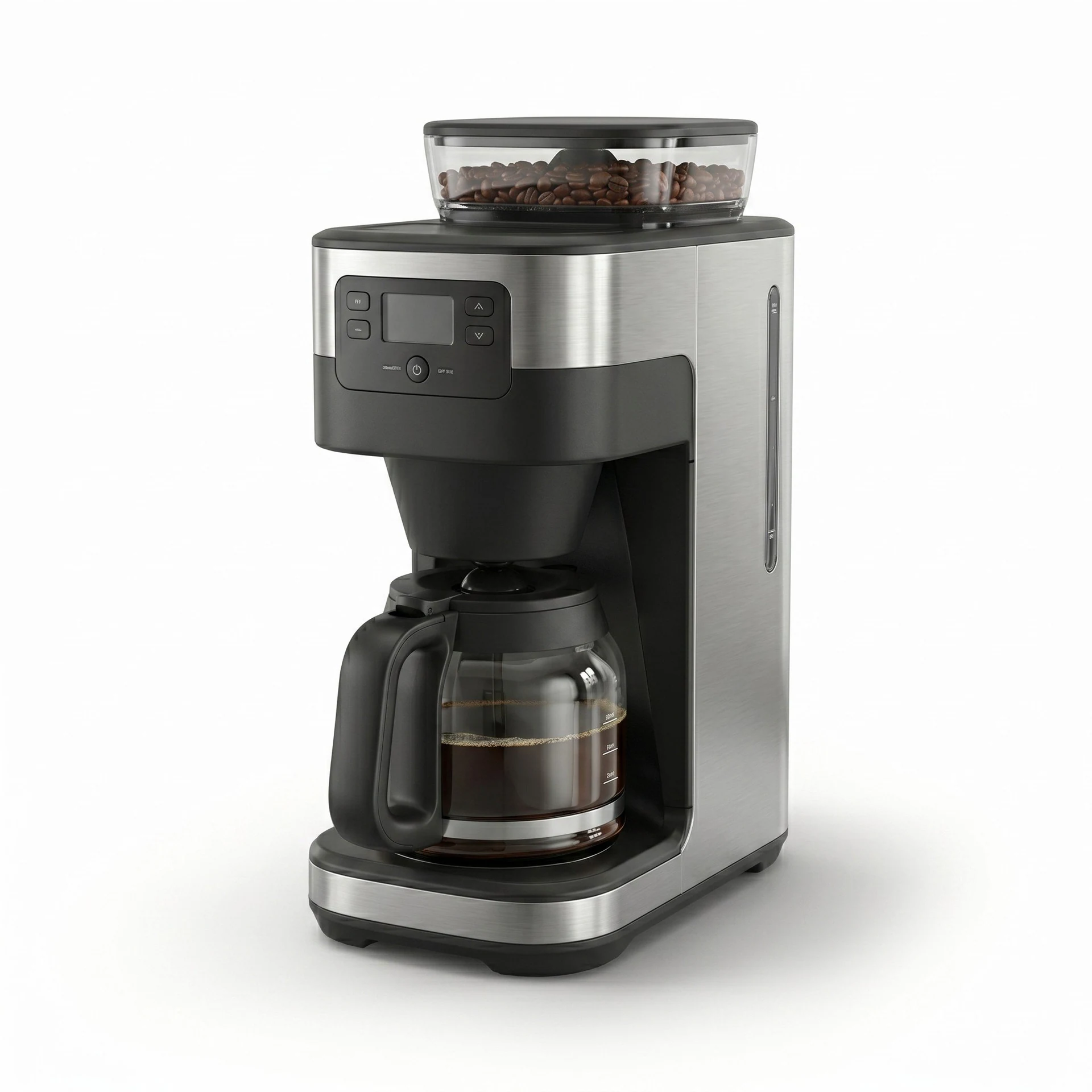
For about twenty years, the product page has barely changed. A few photos on the left, a title and some text on the right, a price, an add to cart button. We have all built listings this way. We have built thousands of them.
At Google I/O 2026, that quiet little format got put on notice. Google introduced Gemini Omni, a system that processes text, images, audio and video together in near real time, and it is being woven straight into Search and shopping. Add Gemini Live, where a shopper can point a camera or just talk, and the way people find and judge products starts to look nothing like a static page.
So is the static product page dead? Not today. But it is sliding toward the bottom of the pile, and the reason matters more than the headline. Let us walk through what actually changed, and what a brand should do about it without panicking.
01What Google Omni and Gemini Live actually changed
It helps to separate the marketing noise from the part that touches your catalog. Two shifts are real and worth your attention.
Shopping became a conversation, not a query
The old flow was simple. You typed a few keywords, Google showed ten blue links and a row of product images, you clicked, you scrolled. The new flow is a back and forth. A shopper describes what they want in plain language, the AI asks follow up questions, and Search assembles a custom answer on the spot, including visual tools and interactive elements built in real time rather than a fixed page of results.
Google also showed Universal Cart, a shopping hub inside Gemini that follows the shopper across Search, YouTube and Gmail, flags compatibility issues, and tracks deals. The point is that the product is now being discussed and compared by an AI layer before the shopper ever lands on your page. Sometimes they never land on it at all.
Search went multimodal and live
Gemini Live lets a shopper hold up a phone, show a product or a room, and talk to the assistant about it with very little delay. Search now accepts image and video queries as easily as text. In that world, the question is no longer whether your page ranks. It is whether the AI can understand your product well enough to represent it, place it, rotate it, and talk about it confidently.
02Why a flat JPEG cannot keep up
Here is the uncomfortable bit for most catalogs. A photograph, however good, is a single frozen view. The AI cannot turn it around, cannot drop it into a shopper's living room at the right scale, cannot relight it for a different scene, and cannot answer a question about the back of the product because the back was never captured.
This is not a small formatting gap. Industry coverage through early 2026 has been blunt about it. When flat 2D photos are pushed into AR or 3D viewers, they show up as thin, depthless projections with no real geometry or lighting. The phrase doing the rounds in spatial commerce circles is that your 3D assets are no longer a feature on the page, they are the storefront. If the asset does not exist, there is nothing for the new interfaces to show.
We see this gap land on real desks. A brand spends years building a clean photo library, then a new platform asks for a 3D model or an AR ready file, and suddenly the entire catalog is the wrong shape for where shopping is going. Photos answered the old question well. They simply do not answer the new one.
03The 3D master asset, explained without the jargon
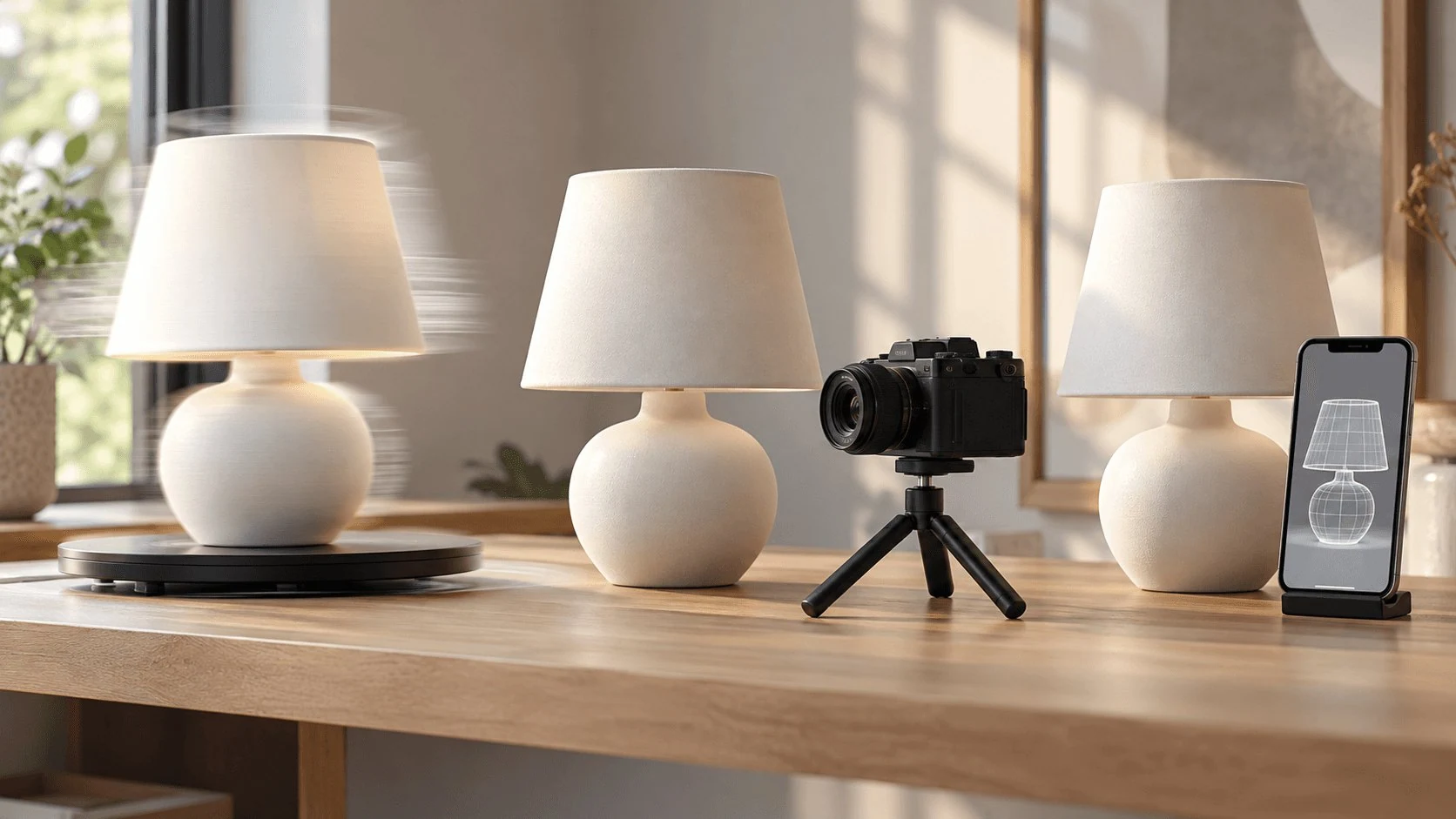
A master asset is one accurate 3D model of your product, built properly once, with correct proportions, real materials and physically based lighting. Everything else is generated from it.
Think of it as the source file your whole catalog can draw from. From that single model you can produce:
• Standard 2D images for your listings, in any background or dimension a marketplace asks for.
• 360 degree spins and animations without booking anything.
• AR ready files so a shopper can place the product in their own room at true scale.
• 3D components for the conversational and spatial interfaces that Omni and Gemini Live are pushing into the mainstream.
The strategy that keeps coming up in serious 3D commerce work is build once, publish everywhere. One master model feeds web viewers, mobile AR and the new AI surfaces from the same source of truth, instead of a fragmented pile of files per device. It is also how brands show infinite variants without reshooting. Some furniture brands run tens of thousands of configuration options from a single master asset, which is impossible to photograph and trivial to render.
| Capability the new interfaces need | Flat JPEG | 3D Master Asset |
|---|---|---|
| Show product from any angle | No | Yes |
| Place in shopper's room via AR | No | Yes |
| Relight for new scenes on demand | No | Yes |
| Feed conversational AI shopping | Barely | Yes |
| Generate unlimited variants | No, needs reshoot | Yes, from one source |
| Stay usable on next gen platforms | Uncertain | Yes |
04Where Smapit fits into this
We will be straight about our role here, because this topic invites a lot of hype and we would rather not add to it.
Smapit builds the 3D master assets that these new interfaces need. When a brand comes to us, we model the product accurately, apply real materials and lighting, and hand back a source asset that is ready to become 2D images today and AR or conversational 3D components tomorrow. The same model that fixes your Amazon listing this month is the one that keeps you visible when a shopper is talking to Gemini Live next year.
That is the quiet advantage. A brand does not need to predict exactly which platform wins. It needs to own its products in a format that any of them can read. We treat the master asset as inventory, not as a one off creative job, so the work compounds instead of expiring with the next photoshoot.
We are not going to tell you the static page is finished tomorrow, or that you must convert ten thousand SKUs by Friday. Most brands should start with their hero products, the ones that drive the revenue and the ad spend, and build the 3D foundation there first.
05Frequently asked questions
Is the static product page really going away?
Not immediately. Text and image listings still work and still convert. What is changing is visibility. As Google Omni and Gemini Live push conversational and visual shopping, flat only listings are becoming the least useful format for AI discovery, so they quietly lose ground rather than disappearing overnight.
What is a 3D master asset?
It is one accurate 3D model of your product, built once with correct proportions, real materials and proper lighting. From that single source you can generate 2D images, 360 spins, AR files and 3D components for AI shopping interfaces, without rebuilding anything.
Can I just convert my existing photos into 3D?
Partly, and not always well. There are AI assisted ways to pull materials and depth from a photo, but a flat image lacks the geometry of the parts it never captured. For products that need to look accurate from every angle, a properly built model gives far more reliable results than a converted photo.
Do I need to do my whole catalog at once?
No, and we would advise against it. Start with your hero products, the few that drive most of your revenue and ad spend. Build their 3D foundation first, then expand as the new shopping surfaces become a bigger share of your traffic.
Will marketplaces still accept normal images from a 3D asset?
Yes. A master asset produces standard listing images that meet marketplace requirements, so you lose nothing on Amazon, Flipkart or your own store. You simply gain the ability to feed the newer interfaces from the same source.
06The takeaway
Google Omni and Gemini Live did not kill the product page. They changed what a product needs to be in order to show up at all. The shift is from owning pictures of your product to owning the product itself as a 3D asset that any interface can read, rotate and talk about.
Brands that build that foundation now get to keep using their old listings while quietly becoming ready for the new ones. Brands that wait will find their catalog is the wrong shape for where shoppers already are. That is the whole decision, and it is a calmer one than the headlines suggest.
About the author
Smapit Media is a Delhi NCR based studio building 3D product visualization, CGI and AI ready content for ecommerce and D2C brands across India. We turn physical products into 3D master assets that work across listings, ads, AR and the new AI shopping interfaces. We write from the studio floor, based on what real brands bring us. Find us at smapit.in.
Planning something like this?
Talk to Smapit